
Cavity wall insulation removal
Failed cavity wall insulation removed and the wall made good, starting with a free survey and a quote.
- A free survey and quote
- Zero deposit on all jobs
- A completion certificate to show your lender
Book your free survey
Leave your details and a member of our team will get back to you to arrange your free survey and quote.
No obligation, no deposit and no card details needed.
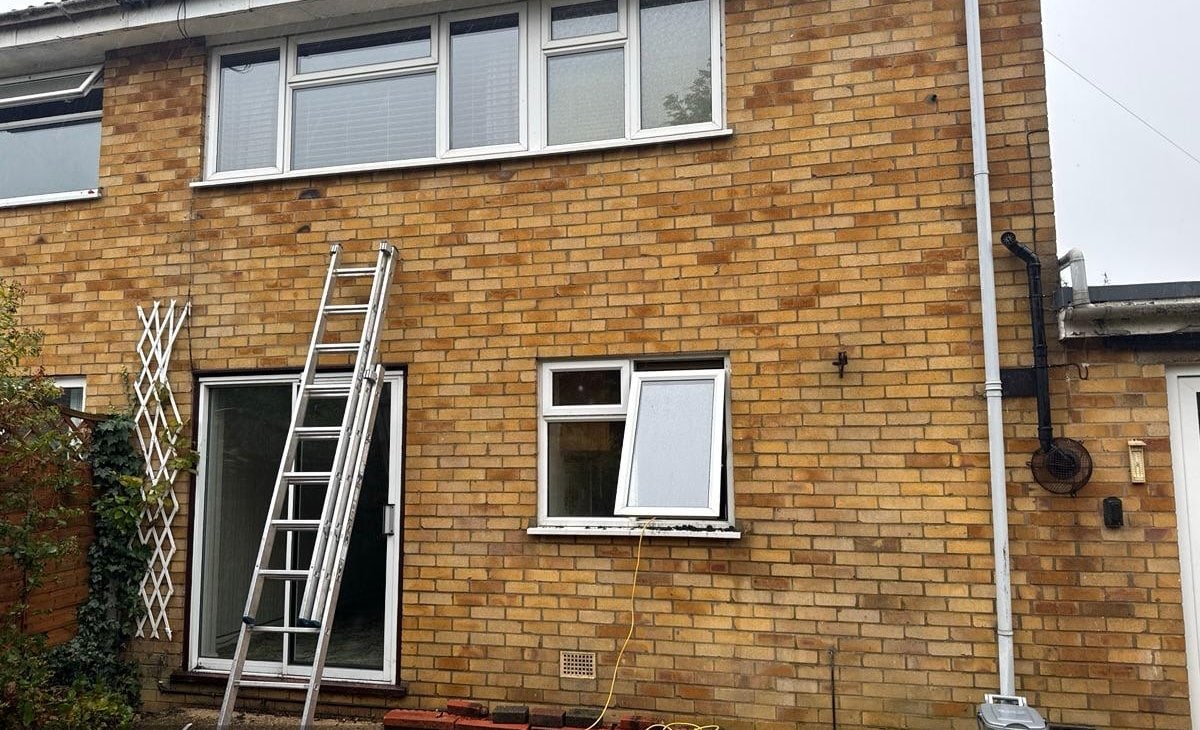
Signs your insulation has failed
Failed insulation often gets blamed on the roof, the gutters, the plaster or the heating.
A free survey first
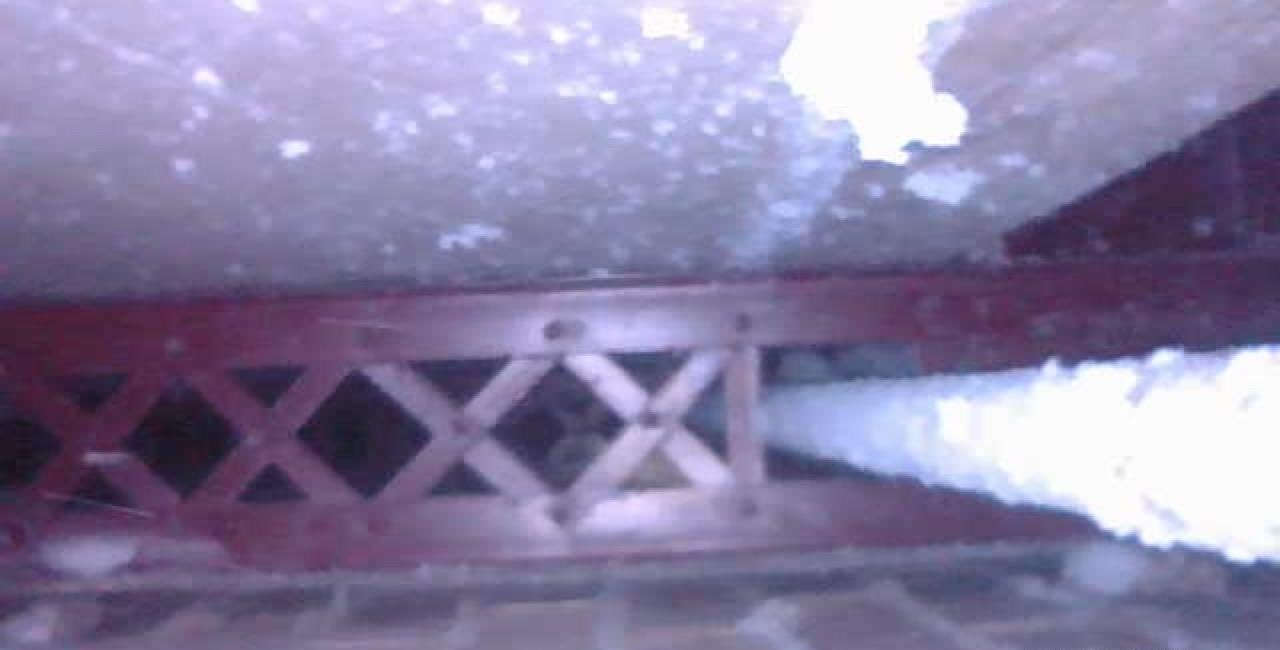
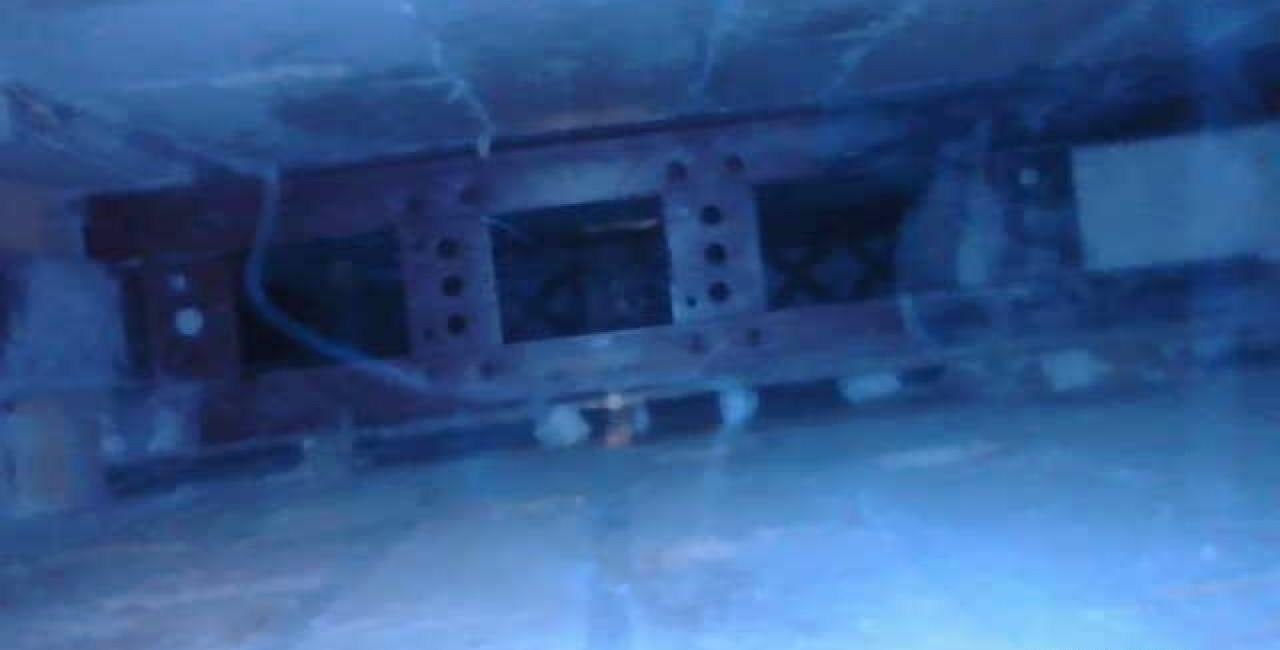
We look at the wall inside and out, put a borescope camera through a mortar joint to see what is in the cavity, and take moisture readings.
Then you get a quote that says what we found and what we would do about it. If the insulation is fine, we say so.
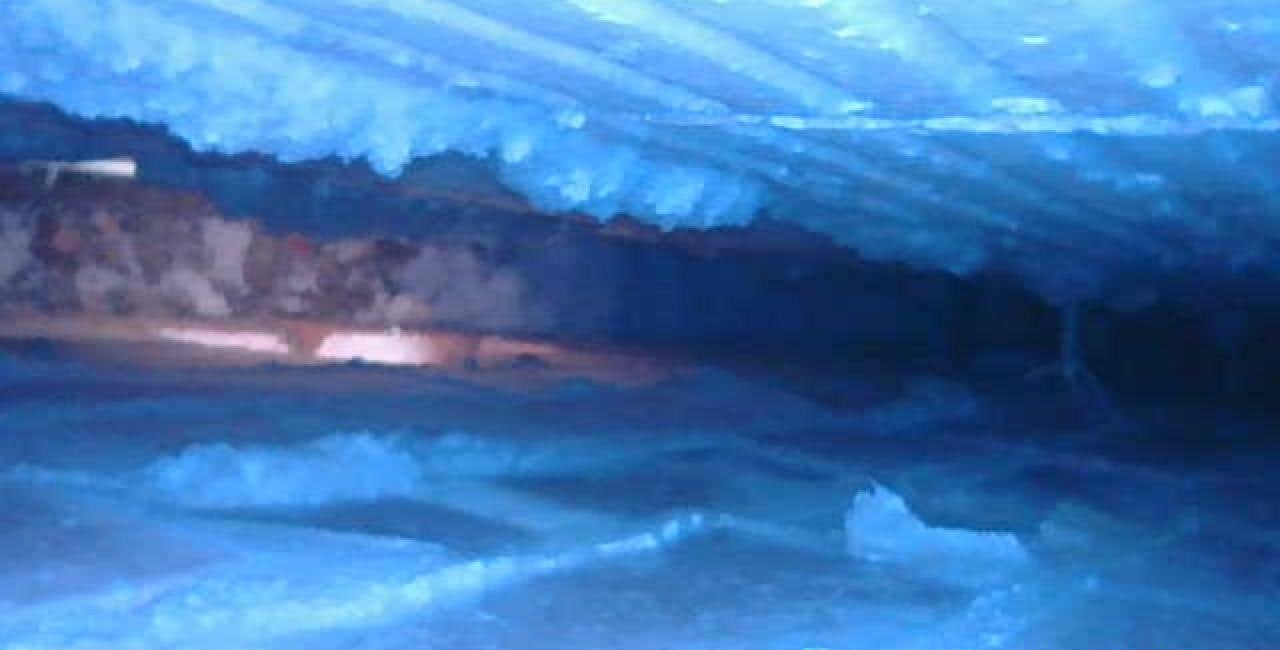
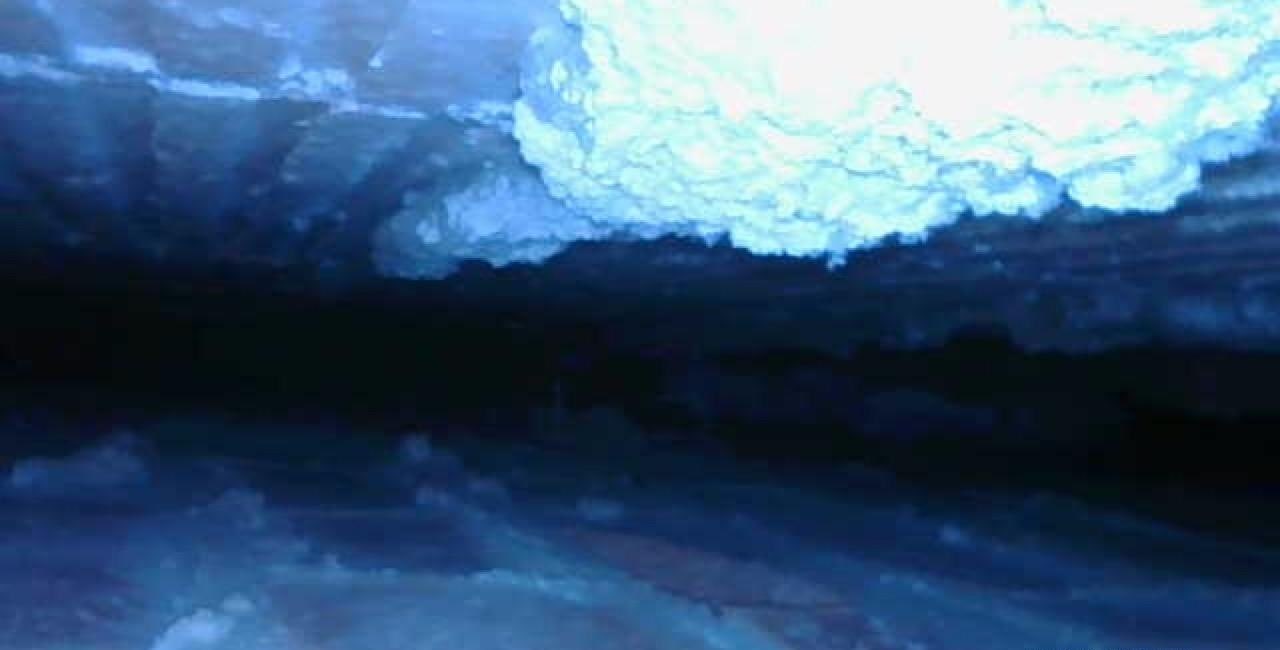
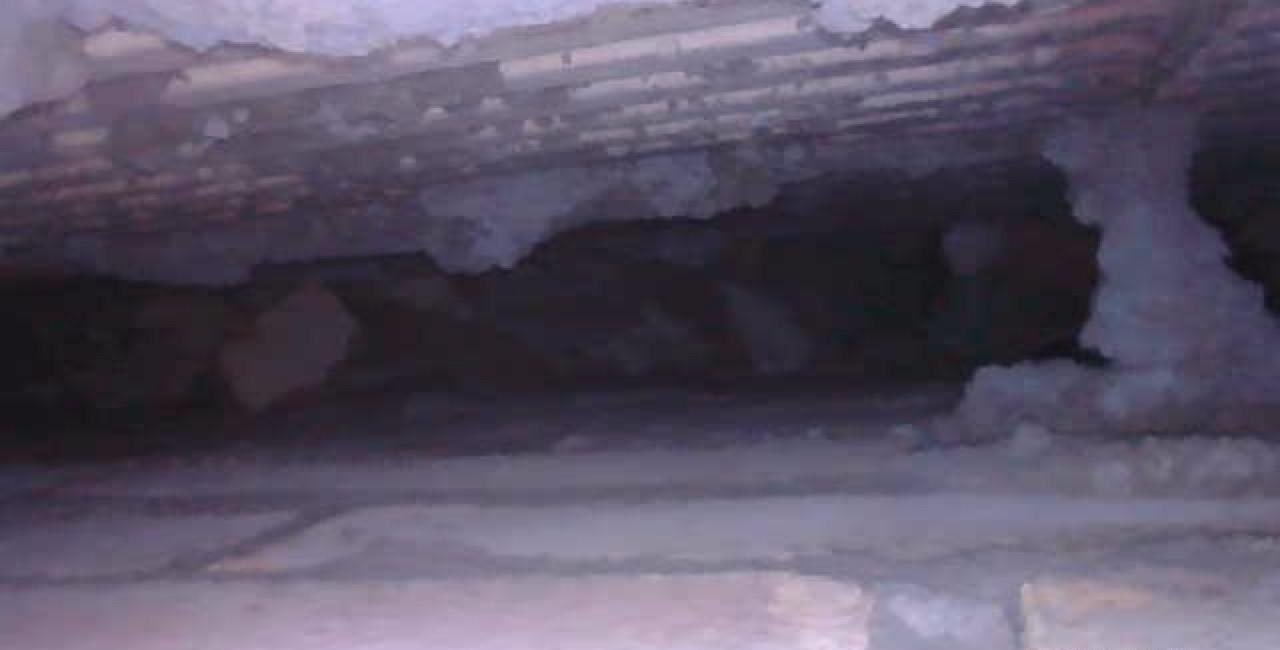
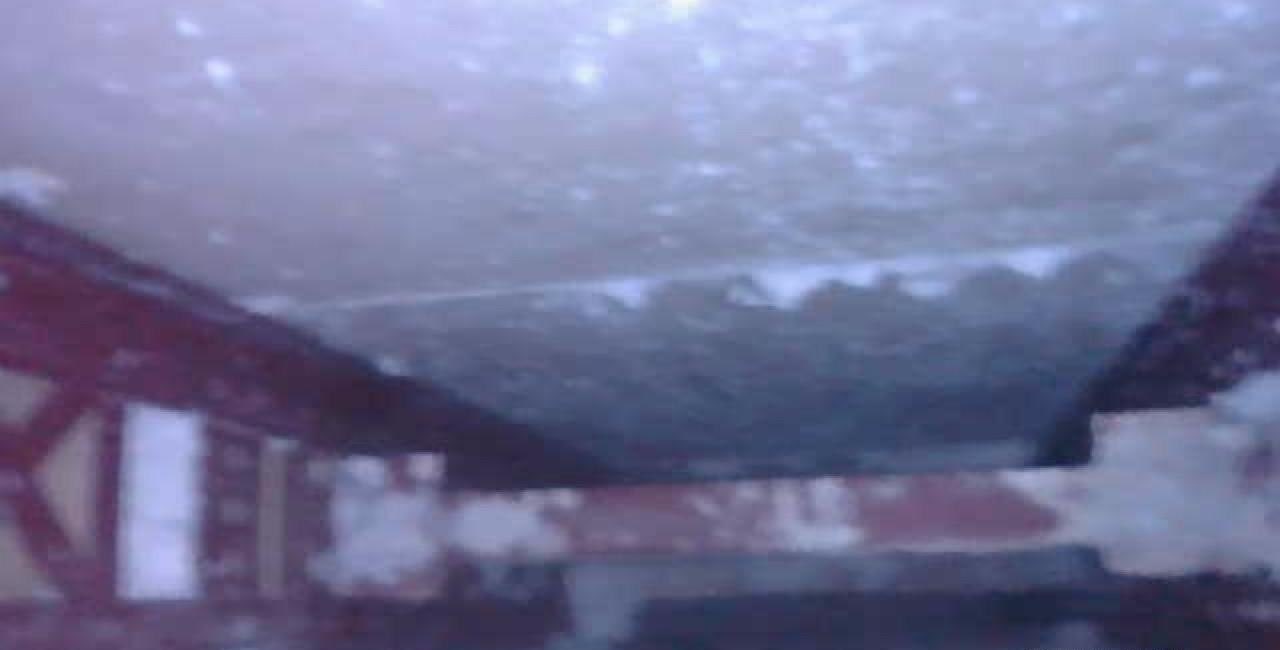
Three ways we clear a cavity
We do not recommend clearing a whole house on the strength of one damp patch. The survey decides it.
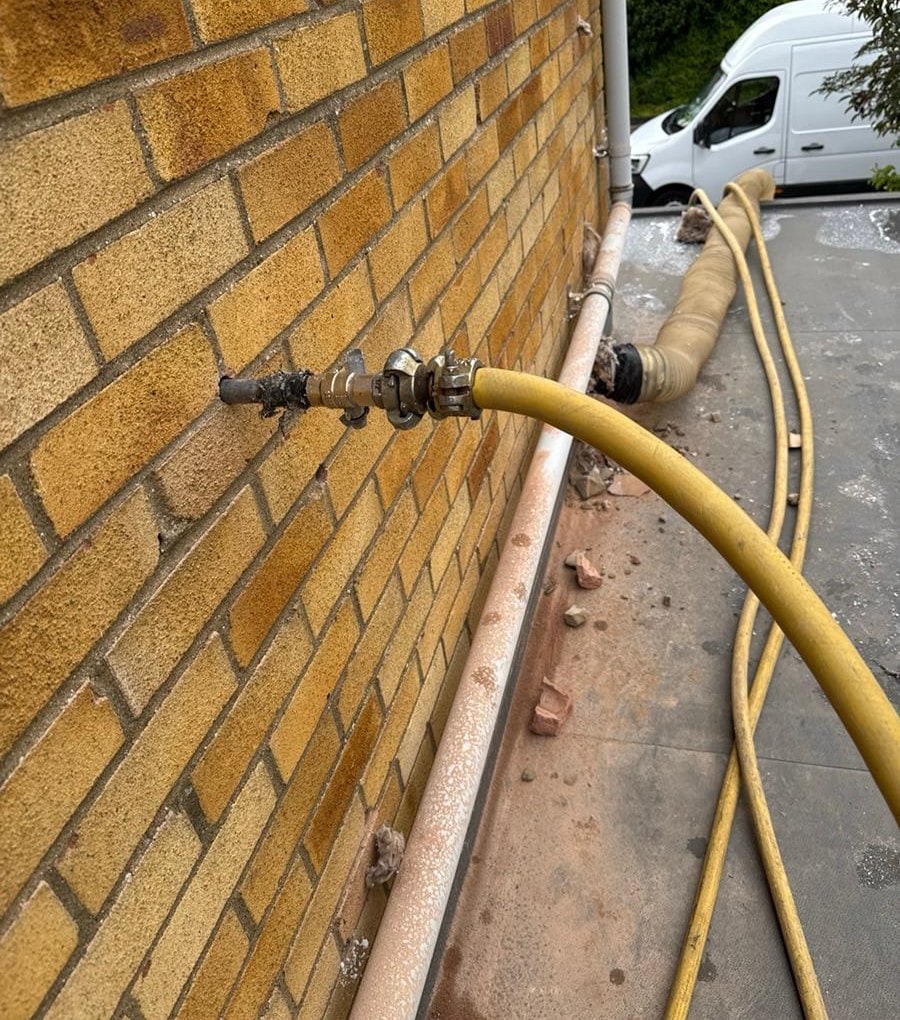
Full extraction
Every outside wall cleared back to an empty cavity, for houses where the fill has failed throughout.
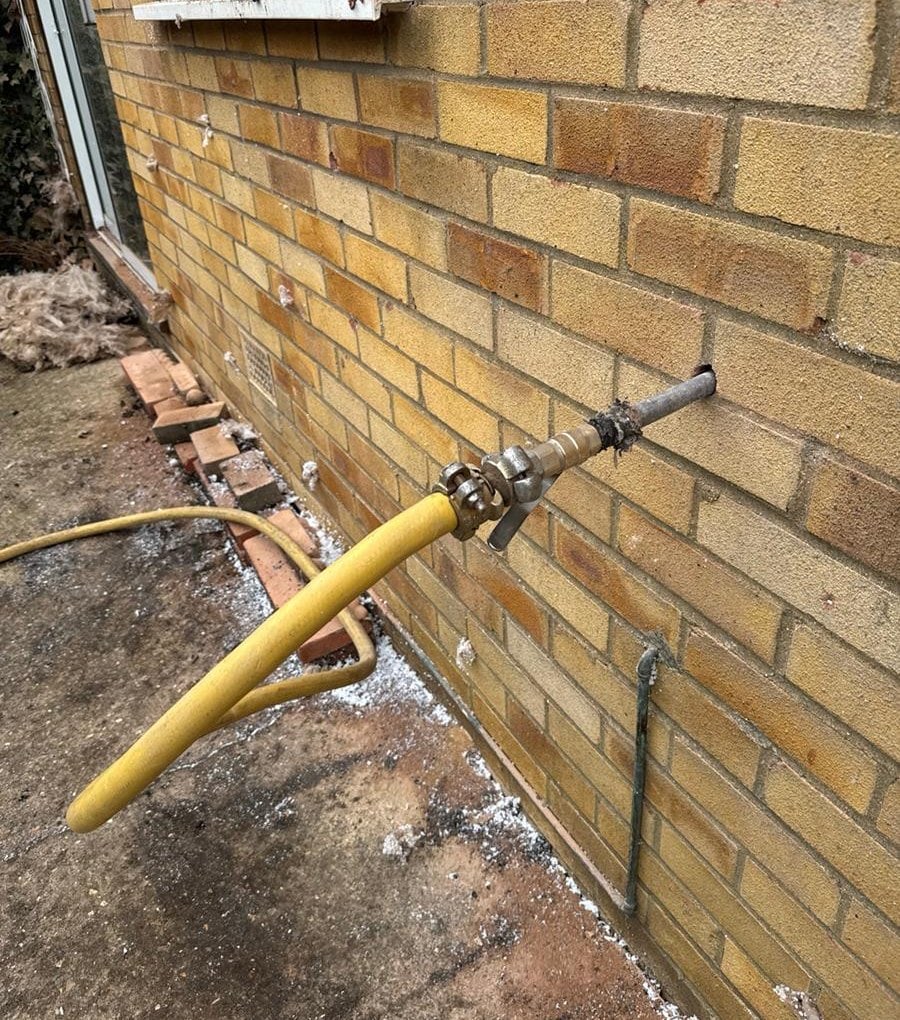
One wall
One wet wall, a gable, or the wall below a run of windows.
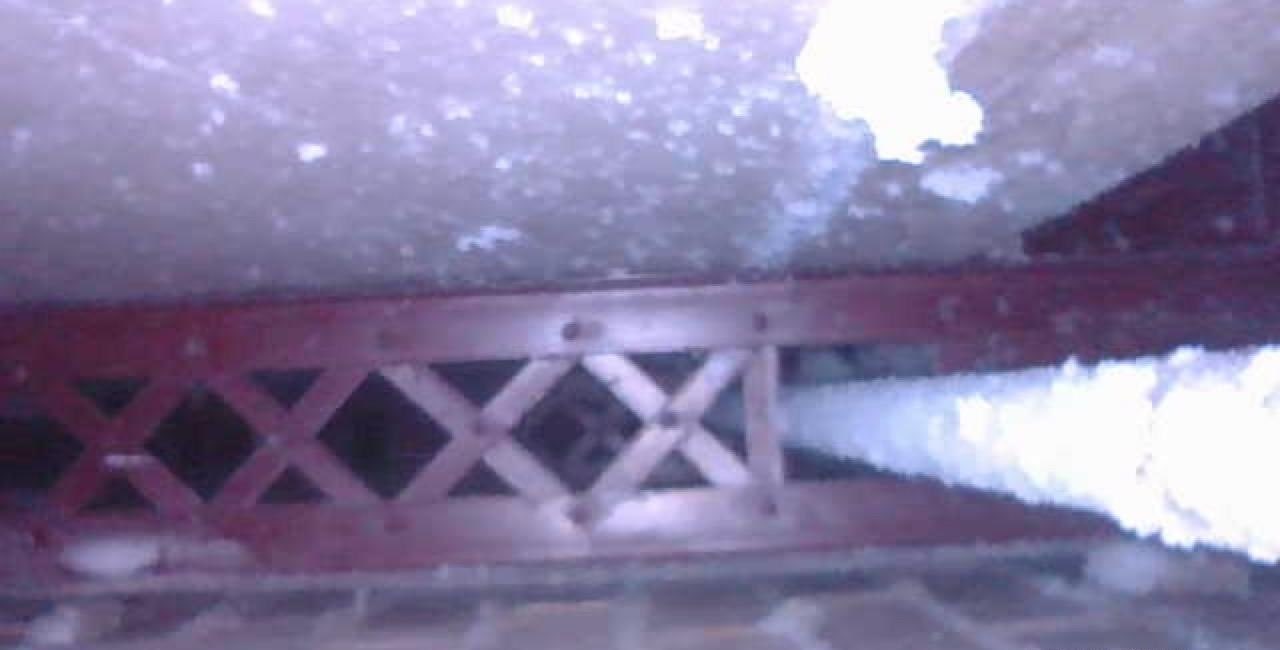
Cavity clean
Builders' debris, mortar droppings and blocked drainage cleared, with or without insulation in the wall.
How the insulation comes out
All of it is done from outside. Nothing is opened from within the house.
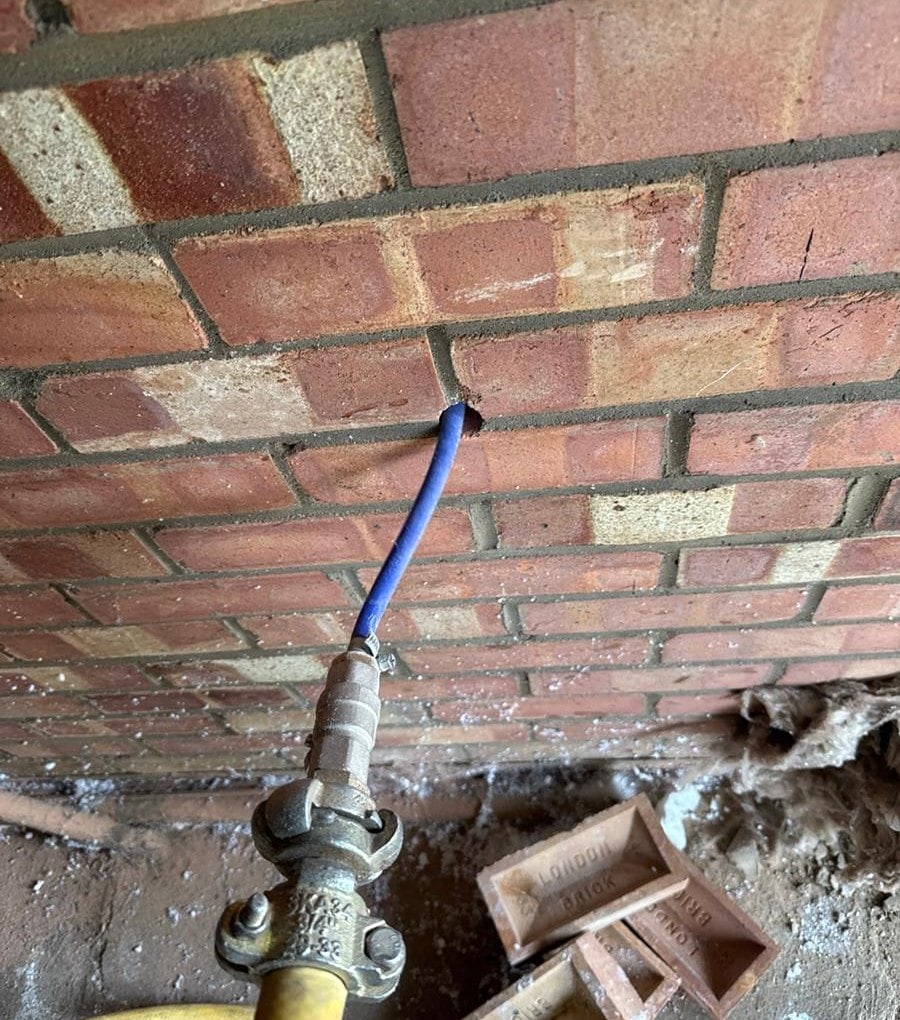
Bricks out
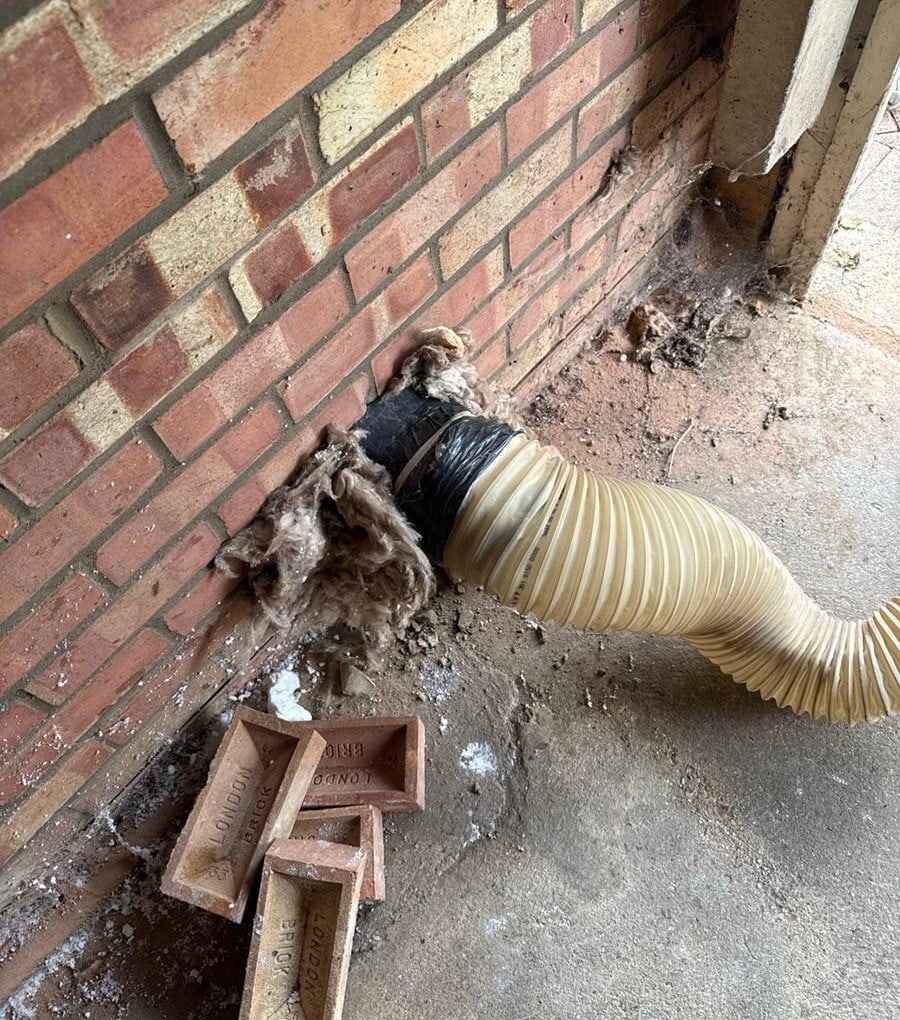
Single bricks come out at intervals along the base of the wall and below windows.
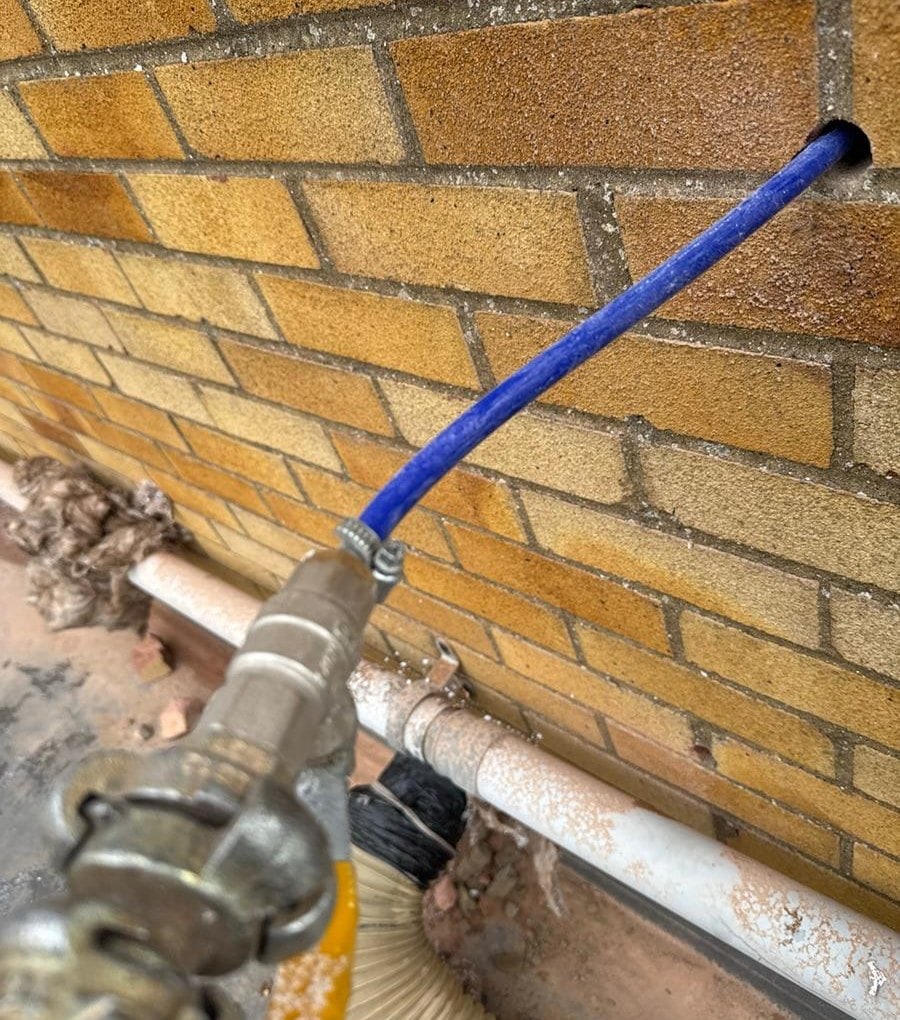
Air in
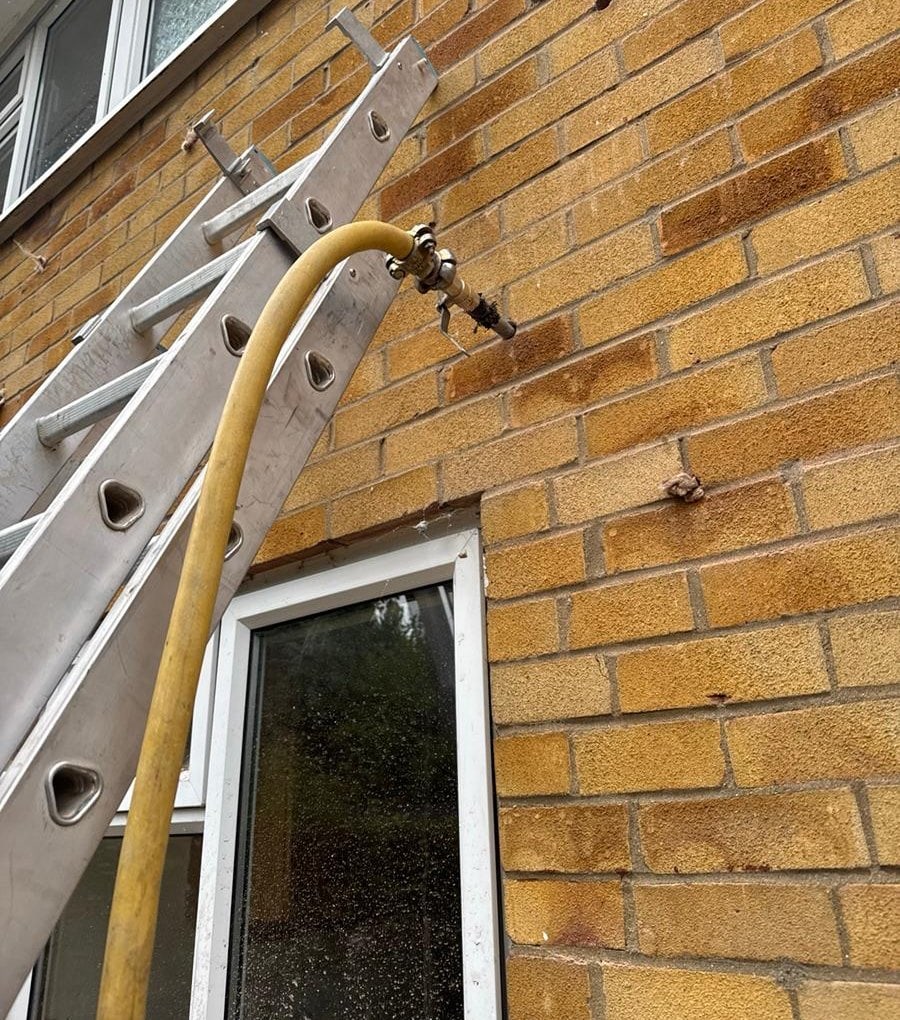
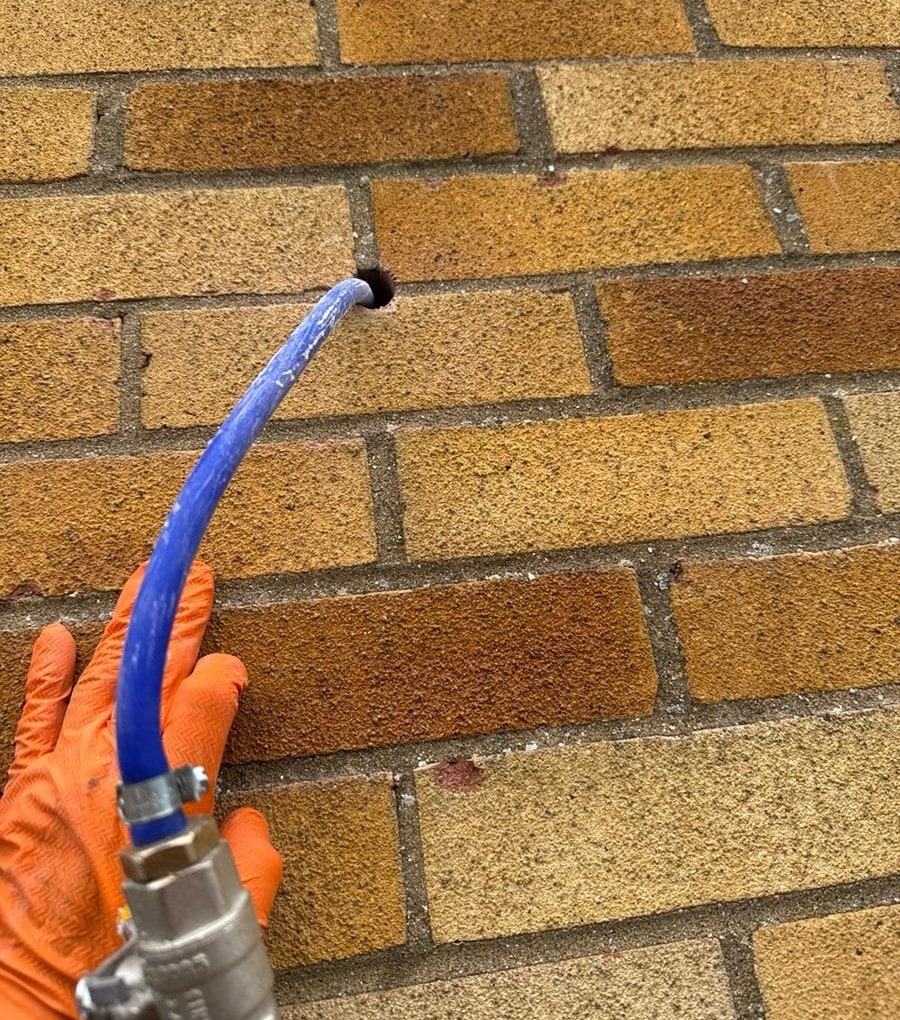
Compressed air goes in through the original injection holes to loosen the fill.
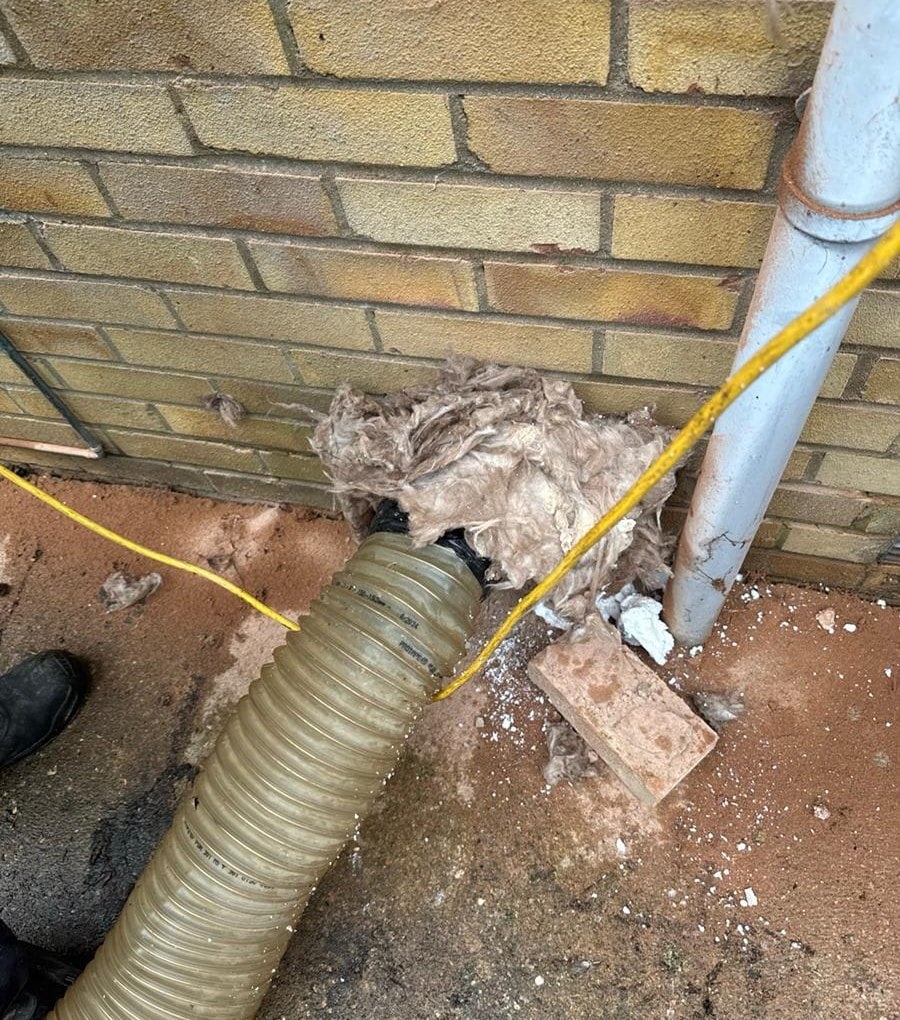
Fill out
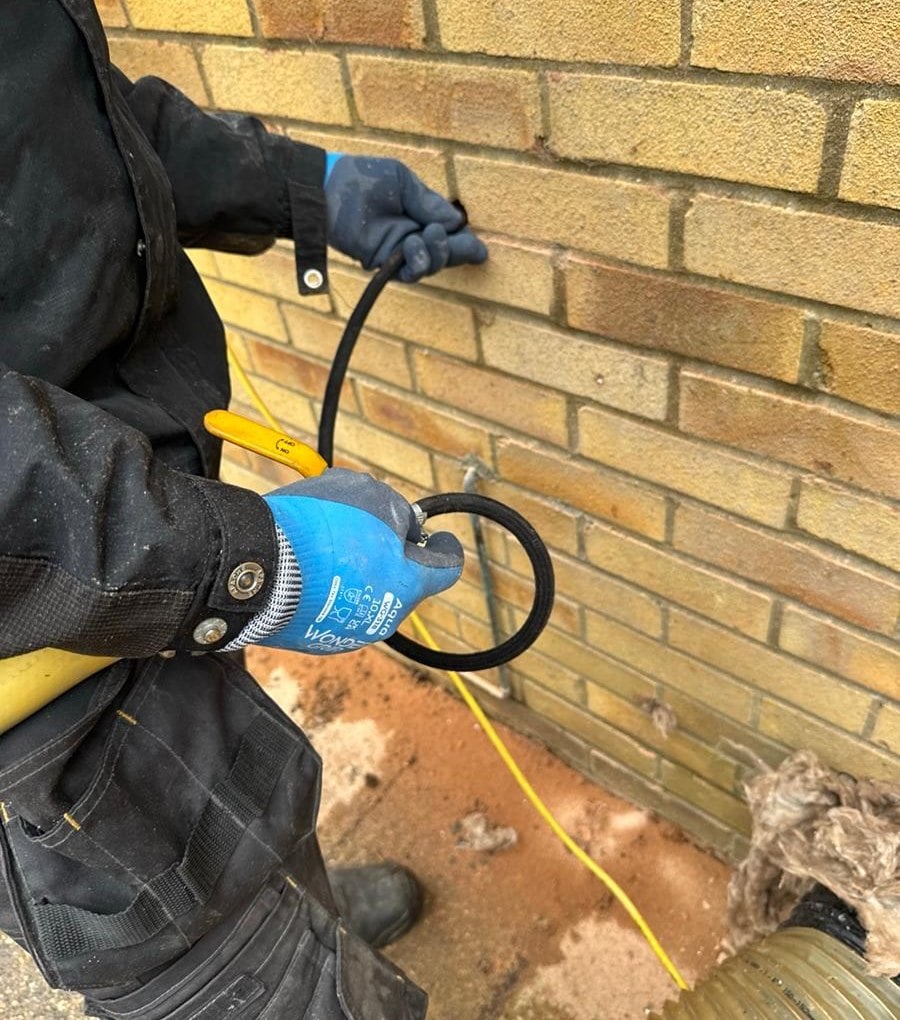
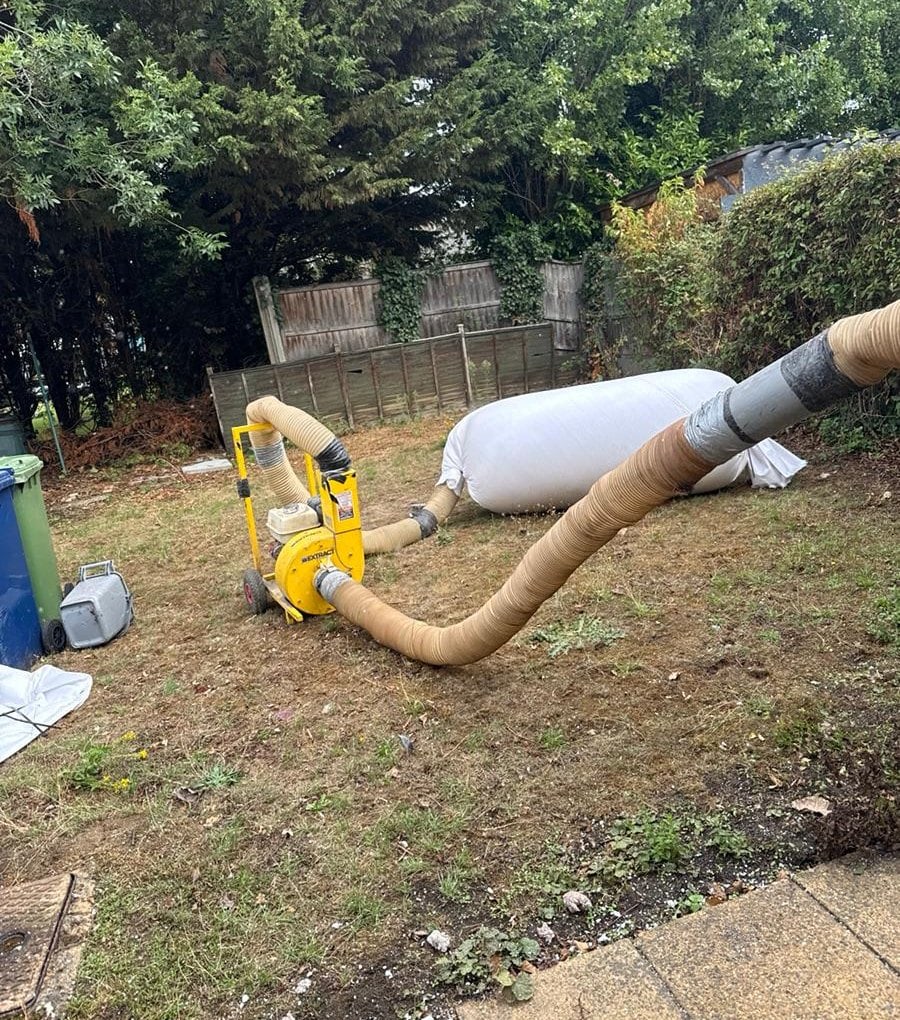
An industrial vacuum draws the fill out through the openings.
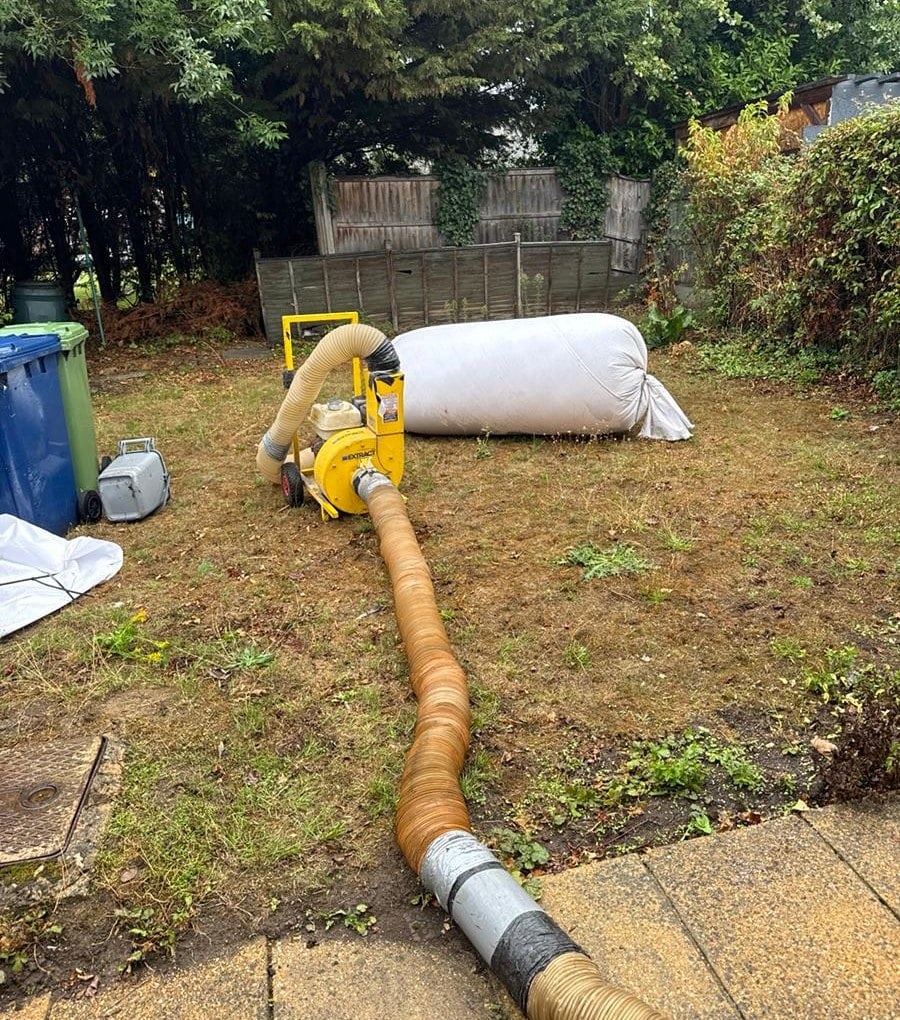
Bagged and taken away
The old insulation is bagged on site and taken away for disposal.
Checked and made good
A borescope checks the cavity is clear, then the bricks go back and are pointed to match.
What we remove
If you do not know which is in your wall, the borescope shows it at the survey.
Blown mineral wool
Loose fibre blown in through holes in the mortar joints. The quickest to remove.
Polystyrene bead
Small beads, in most systems bonded with an adhesive into a mass. Bonded bead takes longer.
Urea formaldehyde foam
A foam that sets in the cavity and shrinks as it ages. It has to be broken up.
Polyurethane foam
Sets rigid and can bond to both leaves of the wall. It takes longest to remove.
Selling or remortgaging?
Lenders and surveyors flag filled cavities where the insulation has failed. Removing it and making the wall good deals with the cause.
Every job ends with a completion certificate and the borescope photos of the cleared cavity, to show your lender.
From our cavity wall jobs
Your questions answered
Do I actually need the insulation removed?
Only if it has failed. Sound, dry insulation in a suitable wall is working and should stay. The borescope shows whether the fill is wet, slumped or missing.
Could the damp be something else?
Often. Gutters, downpipes, pointing, render, cavity trays, ground levels and plain condensation all cause damp that gets blamed on insulation. The survey rules them out first, and if one of them is the cause we say so.
How long does it take?
Published guides put a mid-terrace at two to three days, a semi at three to four and a detached house at up to a week. Foam takes longer than wool.
Is it messy?
Outside, yes, for the duration: bagged insulation, a compressor and a vacuum in the drive. Inside, no. Nothing is opened from within the house.
Does it damage the brickwork?
The bricks taken out are reused. The mortar around them is new and matched as closely as the wall allows. On an old wall the fresh joints will be visible for a while until they weather in.
Will the house be colder afterwards?
A clear cavity insulates less than a dry filled one and more than a wet filled one. Wet insulation conducts heat out of the house, so most people with failed fill notice no loss and often a gain once the wall has dried.
Will wet insulation dry out by itself?
On a sheltered wall in a dry year, sometimes. On an exposed wall, in our experience, no: the next wet spell arrives before the last has dried, and the fill stays wet year on year.
What about my airbricks?
Fill often blocks the sleeve behind an airbrick. We clear the fill from behind every airbrick as part of the extraction, and fit a sleeve across the cavity where one is missing and the floor is suspended timber.
What happens after the insulation is out?
The water stops crossing the cavity, but the wall takes months to dry. Once it is dry you can leave the cavity clear or have it re-insulated, and that is your decision.
Do you cover my area?
We cover all of England and Wales, and mainland Scotland (Scottish islands excluded).
Book a free survey and we will tell you what your wall needs and what it costs.
No obligation, no deposit and no card details needed.